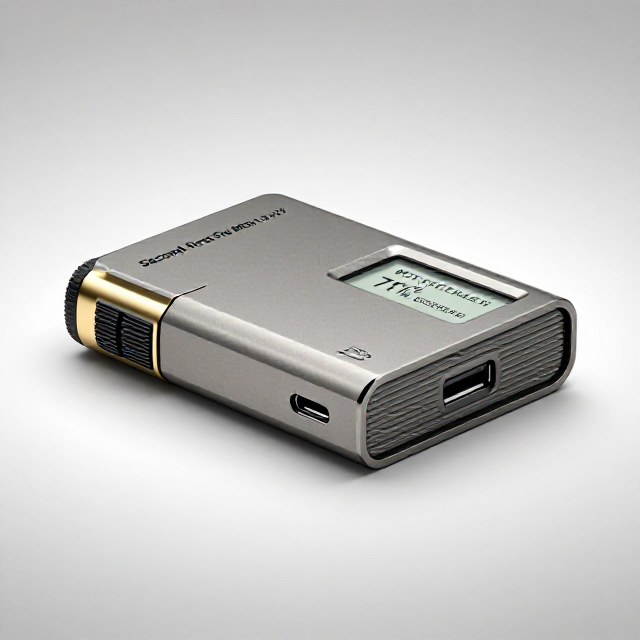
Second First Fire MOD: Pocket Litho-Hostile Verifier
When a scraping sound could be shifting rock—or someone testing your perimeter—this pocket appliance helps you decide before you commit. Built for camps, outcrops, and quiet nights, it prioritizes “not geological” confirmation and intelligent-life cues without escalating the situation.
Listing agent unavailable.
Product Overview
Demand for this model comes from a familiar failure point: everyone is doing something reasonable (watching the outcropping, setting camp, sending someone to hunt), and the one thing you can’t afford is the wrong assumption about that scraping sound. The Second First Fire MOD 1.0 v27 (Generation 2) is the calm, premium answer—an all-in-one pocket appliance that cross-checks terrain behaviors against presence behaviors, so your team can shift from vague unease to actionable watchfulness.
In practice, it functions like a handheld “full-sized appliance” suite: a micro-seismic listener, a directional contact-mic broom, and a soft-spectrum presence sampler that looks for patterns consistent with deliberate movement near the source. You point it at the outcropping, let it take a short listening window, then it returns a plain-language result with confidence bands: GEOLIKELY, NOT-GEOLIKELY, or INCONCLUSIVE—plus a separate flag for “structured activity” signatures that correlate with intelligent observation (pauses, repeats, testing strokes, route-correction).
Daily use is ritual-friendly: clip it to your collar or pack strap, run a 20-second “First Listen” pass at dusk, and a 60-second “Perimeter Repeat” before you sleep. The device is intentionally conservative; if it can’t safely classify, it says so and prompts additional quiet sampling rather than encouraging you to “go check.” A built-in Privacy Dimmer disables all long-range capture and keeps your readouts local-only, which matters when you’re treating the sound as potentially hostile but still want to avoid collecting more than you need.
Power is handled by the v27 Battery Paradox Management Stack, which adapts draw based on ambient silence and signal complexity. Claims are ambitious by design, but real-world users should expect 6–9 hours of mixed surveillance (short scans, standby, two long passes), or about 18 hours in “camp hush” mode where it mostly listens and only wakes the heavy analyzers when something repeats. Safe charging: use the included braided cradle cable, charge on a stable surface, and do not attempt to “top up” from open flames, heated stones, improvised coils, or any other romantic solutions.
Purchase considerations: this is for people who need authority and restraint in the same device—leaders delegating tasks while still owning the threat picture. It will not identify a specific species, person, or intent, and it will not replace disciplined watch rotation; it will, however, reduce coordination failure by giving Miller-and-Davies-style teams a shared, timestamped verdict to discuss. Edge cases: heavy wind over fractured rock can mimic scraping; damp lichen layers can mute true contact sounds; and if something intelligent is deliberately varying its pattern to appear geological, expect more INCONCLUSIVE results (which is, frankly, a result).
Key Features
- Dual verdict display: Geological Likelihood + Structured Activity Flag
- One-handed “First Listen” and “Perimeter Repeat” scan rituals (20s/60s)
- Privacy Dimmer: local-only storage with optional auto-purge at dawn
- Battery Paradox adaptive runtime (6–9 hrs mixed, ~18 hrs hush mode typical)
- Generation 2 build: titanium-ceramic shell, glove-friendly dial, sealed ports