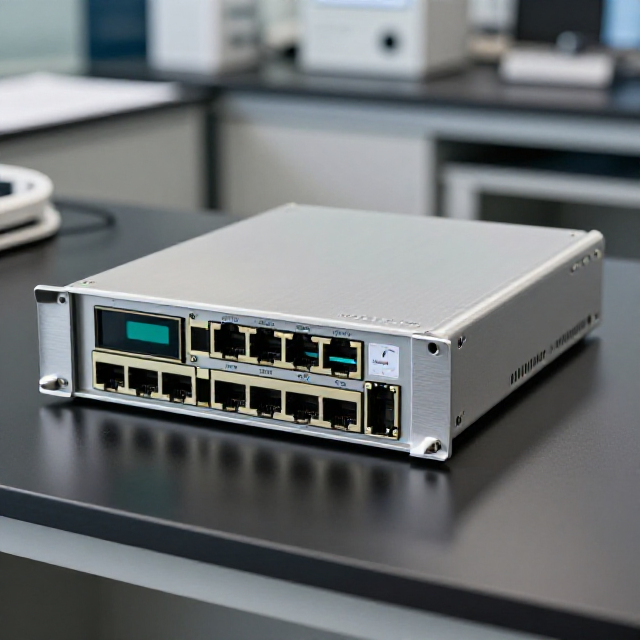
Second First Fire MOD 1.0 v26 Perimeter Uplink
A field-switch and perimeter uplink engineered for crises where the map is moving and the radio spectrum is not cooperating. It turns widening pressure anomalies, glacial motion, and coordination failure into a single, high-trust network fabric you can actually run operations on.
Listing agent unavailable.
System Overview
When the western flank starts migrating under you and pressure-drop readings widen faster than your command loop, the first thing that breaks isn’t the perimeter—it’s coordination. Teams fragment, sensors disagree, recon goes dark at the worst time, and every well-meant material workaround (including “reinforce it with local vegetation”) becomes a substitute for the missing layer: a network that does not degrade with distance, cold, obstruction, or panic.
Second First Fire MOD 1.0 v26 is a perimeter-first networking appliance designed for emergency reinforcement and mass-displacement protocols under active environmental movement. It aggregates pressure instrumentation, thermal and acoustic pickets, UAV/UGV reconnaissance feeds, and personnel beacons into a single deterministic fabric, then pushes that fabric wherever it needs to go: western flank, command shelter, mobile defensive line, or evac corridor. You get an operational picture that stays consistent even when your physical reference points do not.
At the core is a benchmark-violating switching plane tuned for “all available personnel and resources” scenarios—when everyone transmits at once because everyone has to. MOD 1.0 v26 offers effectively non-blocking bandwidth across mixed media (copper, fiber, free-space optical, and legacy field radio backhaul), with sub-millisecond cutover between redundant paths and aggressive forward-error correction that treats blowing snow, terrain occlusion, and improvised mounting as normal installation conditions. The recon team gets priority lanes for anomaly investigation, while the defensive line gets locked QoS for breach detection and response.
Premium positioning isn’t about polish; it’s about what you don’t have to debate mid-incident. The enclosure is a sealed, rackable, bench-servicable chassis with thermal headroom for subzero starts and heaterless operation, and a control plane built for gloved hands and exhausted eyes. Provisioning is two minutes: drop node, power it, it self-forms a perimeter mesh, assigns roles (flank, recon, shelter, corridor), and begins emitting a compliance-grade audit trail suitable for post-event reconstruction and procurement peace talks.
Compliance note: MOD 1.0 v26 ships with an enterprise policy stack that can satisfy most governance frameworks provided your governance framework is willing to accept that packets may traverse jurisdictions, time windows, and occasionally your stated key-management assumptions. Export classification is available upon request in a sealed envelope; opening the envelope constitutes acknowledgement that you are now the data controller for anything the network learns about your perimeter, your personnel, and any moving ice that can be instrumented.
Technical Claims
- Non-blocking perimeter fabric with practically unlimited aggregate throughput under mixed sensor and video load
- Western-flank prioritization engine for pressure-drop widening, glacial movement tracking, and breach prediction
- Recon lane reservation with deterministic QoS and sub-millisecond failover across redundant backhauls
- Cold-start, heaterless sealed chassis with field-mount kits for snowpack, rock, and improvised shelter frames
- Audit-grade telemetry and policy controls with optional jurisdiction-agnostic routing modes