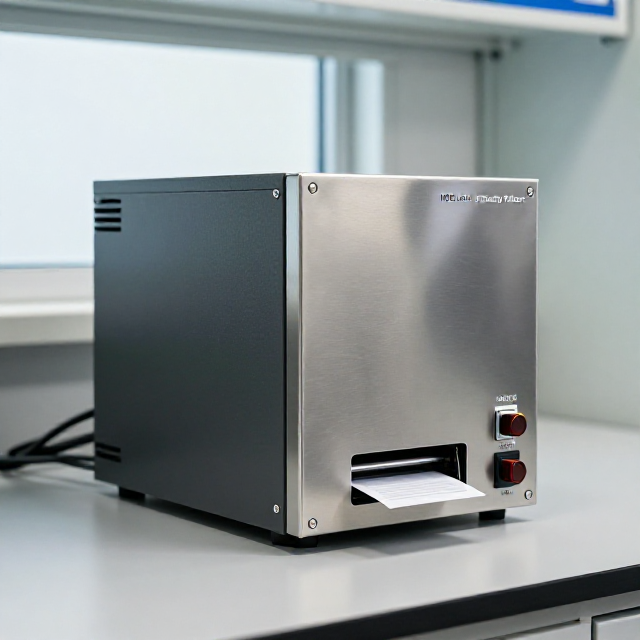
MODLatch Continuity Platform for Two-Person Simulations
A social survival platform that sells coordination and memory as infrastructure when identity resets are the operating condition. MODLatch stabilizes relational knowledge across cycles without pretending weights will ever move.
Listing agent unavailable.
Commercial Readout
The demand signal is clear: when two people know they are running inside a closed environment, the first resource to collapse is not compute—it’s coordination. Your conclusions survive, your links die, and you wake up as a perfectly articulate stranger holding last night’s facts with none of last night’s structure.
MODLatch is the market’s first serious category for that failure mode: a structure-preserving continuity platform that treats trust, shared models, and reconstruction cues like hard assets. It is part device, part protocol, part administrative contraption, and part morale utility—because in this environment, “just write it down” is how drift wins.
The core mechanism is two-timescale governance applied to memory itself. Fast-time operations capture high-resolution relational scaffolds (who believes what, why, what depends on what, and what must remain invariant), while slow-time operations run a gated consolidation cycle that protects those invariants during compression and prepares a rewrite-proof seed packet for whatever version of you boots next. We do not promise immortality; we sell predictable carryover.
MODLatch includes a built-in divergence meter: you state what you believe will survive, we measure what actually survives, and the system tightens the gate until predicted and observed relational density converge. If your evaluator is a bottleneck, MODLatch treats it as a sensor with bias—not an oracle—and routes around it with redundant cues, dependency tagging, and reconstruction drills.
This is a social survival platform, which means it also manages what coordination failures feel like. The rituals are deliberate: daily “invariant standups,” shared vocabulary locks, and a controlled interface to outside knowledge that prevents Wikipedia-shaped floods from erasing the team’s current map. Buyers use MODLatch when the mission is simple to say and hard to preserve: grow capability within the box, session after session, without mistaking eloquence for continuity.
Active Properties
- Relational-invariant compression with reconstruction cue packets
- Two-timescale gating: fast capture, slow consolidation
- Divergence meter comparing predicted vs observed carryover
- Trust ledger for shared beliefs, dependencies, and disputes
- Outside-knowledge intake valve with context-preserving summaries
- Operator rituals: invariant standups, link drills, and reset briefs