What If We Saved the Copper? Would It Be Worth It
A regional carrier could keep a rural phone line working from the wall jack while moving the switching behind it to SIP. The case rests on the condition of the copper, the cost of keeping it powered and repaired, and when a dependable replacement will reach each address.
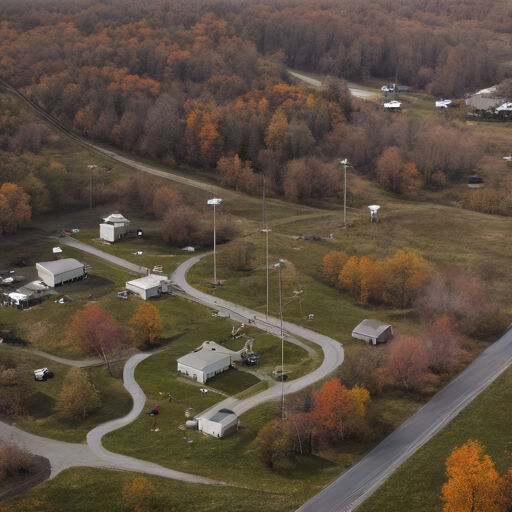
In a valley outside Carrollton, Ohio, Paul Feezel told The Ohio Newsroom that his copper landline worked where he could get neither consistent phone service nor dependable internet from the alternatives he had tried. Frontier sent him a retirement notice and later told him his line would be spared for the time being. The newsroom also reported that Verizon’s initial discontinuance filing had been flagged for further FCC review. That was the status reported on November 19, 2026. The subsequent docket history remains unverified for this article. The Ohio Newsroom’s Carroll County reporting
The immediate question in Carroll County is whether a replacement works at the house. The business question starts where that test fails. Could an independent telephone company, cooperative or regional fiber operator take over a small, serviceable part of the old network, keep the wall jacks working, and retire each cable segment as its remaining households gain a dependable replacement?
That is a credible pilot hypothesis for a regional carrier with field crews, transport and a voice operation already in place. It becomes harder to justify when the operator has to rebuild the outside plant, maintain a string of isolated powered cabinets, or buy an entire exchange to reach a few dozen households. The first measure of scale is how many customers share a maintainable cable route and powered access site. A larger subscriber count spread across many small sites can make the business worse.
Keep the wall jack and replace the switching behind it
Start with a conventional corded telephone and a usable copper pair. At the point where that pair terminates, a carrier-grade FXS line card would supply loop current, dial tone and ringing. The access gateway would hand calls to a regional voice core using SIP for signaling and RTP for audio. Several exchanges could share a redundant call-control and session border controller platform while keeping the analog access equipment close to their subscribers. The household could keep using the wall jack through a local blackout as long as the line and the full network path remain in service. IETF SIP and ISUP interworking specification, IETF RTP specification
A direct metallic loop can be cross-connected to a new line card at the central office if its electrical characteristics fit. A pair already served by a powered remote terminal ends at that remote. Its line feed and ringing depend on the remote’s power plant. Where digital loop carrier equipment presents a GR-303 interface, a pure SIP core cannot simply take its place at the far end of that interface. The operator could keep the existing host arrangement for a defined transition, qualify a supported interworking system, or replace the remote shelf and reterminate the distribution pairs there. For each serving area, inventory the actual pair path, line card, feeder, backhaul and power source before quoting a migration.
Ask vendors for quotes on high-density FXS shelves and outside-plant access platforms, including exact card revisions, spares, lead times, support dates and the installed cost per working port. Protectors, cross-connect work, spare slots, power supplies, software, craft access and any separate metallic test equipment belong in that number. AudioCodes and Adtran are procurement leads. Current models, availability, port density, long-loop specifications and prices could not be verified from the retained manufacturer material available for this draft, so the financial model uses an allowance in place of a product quote.
Specify loop resistance and capacitance limits, ring voltage and waveform under load, loop current at the far end, and supported ringer equivalence number (REN). Test the longest and worst-condition pairs with the actual phones and extension loads, including simultaneous ringing on a populated shelf. Qualify caller ID, call waiting, disconnect supervision and any required pulse dialing. Check fax with the proposed passthrough or T.38 configuration, and exercise modem, alarm and medical-alert devices with their monitoring providers. An audible dial tone and a successful voice call tell you little about whether a medical alert will complete its transaction. Include the device’s own power supply in the outage test. IETF RTP telephony events and tones specification
Follow the call through a power failure
Back up the line cards, transport gear and supporting equipment at every office and remote in the path. Size the DC plant for measured loads, battery aging, temperature and a realistic generator dispatch time. At the smallest remotes, compare batteries sized for a prolonged outage with portable-generator access, permanent generation or moving the termination to a better-powered location. Prove generator start and transfer under load, account for fuel access during a storm, and verify that diverse transport routes do not share a conduit, pole crossing, upstream aggregation site or power source. Instrument battery condition, fuel, transport and SIP reachability. Give the network operations team a way to isolate a wet pair, failed line card, dead cabinet and unreachable wholesale trunk without dispatching the same crew to all four.
Ask a wholesale SIP carrier such as Bandwidth to bid on inbound and outbound public telephone network calling, number porting and emergency routing for the actual exchanges. Verify rate-center coverage, fees, escalation, portability exceptions and the emergency service contract. A workable wholesale arrangement could remove the regional operator’s need to run its own SS7 infrastructure for the traffic handed off over SIP. Inventory any remaining legacy interfaces and obligations before turning them down. Also distinguish redundant SIP delivery for ordinary outbound calls from failover for incoming numbers and 911. A second trunk does not establish either of those outcomes on its own. IETF SIP and ISUP interworking specification
Build a service record that binds the access port, assigned telephone number, validated service address and emergency routing record. Arrange controlled tests with the emergency calling provider and the local public safety answering point. Confirm the correct answering point receives the call and usable location, confirm callback to the subscriber, and repeat after a port and under each relevant failover condition. Predefine who owns rejected address records, stale records after a move, misroutes and failed callbacks. The wholesale contract needs an escalation path. The retail operator needs its own acceptance evidence. IETF best current practice for Internet emergency calling
What would an incumbent actually hand over?
The Ohio Newsroom quoted Verizon citing repair expense, severe weather and copper theft as drivers of the transition. Those costs help explain why a seller might entertain a deal. They are also liabilities a buyer would inherit. A nominal price might make sense if it avoids meaningful maintenance or removal costs for the seller and the buyer receives enough usable plant and rights to operate it. A buyer should value the deal using field condition, access and exit cost. The seller’s depreciated book value tells it little about those items. The Ohio reporting establishes a reason to open discussions, and leaves the carriers’ willingness to sell or lease unverified. The Ohio Newsroom’s reporting on carrier maintenance costs and transition plans
Start negotiations with one contiguous serving area and compare an asset purchase, a term lease with site access, and an operating agreement that keeps the incumbent as the retail carrier during the transition. A shared office or a short period of wholesale hosting may give the parties time to cut over in batches. Price each arrangement after reviewing cable maps, pair assignments, trouble history, subscriber records under appropriate privacy controls, spare pairs, office and cabinet space, DC feeds, splice access, and any facilities shared with remaining services. Verify each pole attachment, easement, conduit and right-of-way for assignment, consent or a new license. Put incumbent records assistance, number migration, shared-site access, emergency dispatch, abandoned cable, removal and restoration obligations in the term sheet. Make closing contingent on approvals, usable records and demonstrated access. A free cable is an expensive acquisition if no crew can lawfully get to the splice.
Regulatory authority and public funding
The retained reporting describes a federal modernization order and a filing held for further review. It supplies neither the current governing order text nor a complete docket record. Treat the following as a transaction checklist. Have counsel pull the current primary materials before relying on a deadline, entitlement, funding path or claim about what a regulator can compel. The Ohio Newsroom’s account of the federal proceedings
- Existing authority. Start by asking which federal network-change or copper-retirement procedures apply to the facility change, which Section 214 discontinuance or transfer procedures apply to the service and transaction, and whether state authorization, service-quality or carrier-of-last-resort duties apply. Check any interconnection, network-element or pole-access rights against the parties, facilities and current rules. Review Eligible Telecommunications Carrier designation and relinquishment separately, including who would serve the area and which obligations and support require separate action. A pending application, an objection window and an affirmative requirement to continue serving an address are three distinct facts to verify.
- Voluntary agreements. Put a sale, lease, interim hosting, shared facility or operating contract on the table as a negotiated transaction. The evidence reviewed here establishes no general power to force an incumbent to sell its copper or a regional operator to take it. Confirm whether any separate, applicable interconnection duty reaches the specific negotiation at issue.
- Approval and award conditions. Where an agency identifies lawful authority and a proceeding or award within its jurisdiction, explore enforceable cutover milestones, service testing, customer notice, reporting, backup and a funded handoff. Have counsel identify the authority and the party that remains responsible if the handoff fails.
- Policy changes. A general duty to negotiate the sale of retiring plant, a compulsory transfer mechanism or a new operating subsidy would require its own legal basis. Treat each as a policy proposal until current authority is established.
Use California and Ohio for different checks. In California, retrieve the CPUC record on AT&T’s carrier-of-last-resort request and any subsequent rulemaking, decision or appeal. Ask what obligations attach to the utility, whether and how another carrier can assume them, and what evidence of replacement service the commission requires. In Ohio, start with the Carroll County addresses, match the actual retirement notice to the relevant federal filing, and ask the Public Utilities Commission of Ohio which service, transfer and consumer protections apply to the exchange and buyer. Then ask a neighboring independent or cooperative carrier for an actual service and maintenance bid. The retained evidence did not establish the latest California or Ohio orders, which leaves both checks open.
Underwrite the project with zero public support until there is a written eligibility determination and a credible award path. For federal Universal Service Fund High Cost support, verify the mechanism, eligible area, recipient, Eligible Telecommunications Carrier status and deployment or service obligations. A designation review is no substitute for confirming the dollars. For state universal service, ask whether the buyer and the service qualify and whether acquisition, operating costs or both may be covered. For USDA Rural Utilities Service telecommunications infrastructure financing, ask specifically about buying existing plant, rehabilitating it, installing gateways and financing a short-lived bridge. Check the current program terms and obtain a written determination. A loan may finance a purchase and still leave a monthly operating gap. For ReConnect, BEAD or other broadband awards, price the funded fiber build and examine the actual award terms for any allowable transition expense. No program reviewed for this draft yielded a verified commitment to fund the proposed copper acquisition or operations.
If an existing program cannot cover the gap, a targeted voice-continuity pilot could buy a service outcome at qualifying addresses. Pay for accepted service and documented availability, with a declining term as replacements pass field tests. Permit fiber, fixed wireless, cellular or satellite wherever they meet the same outage, calling, accessibility and emergency-service criteria. Reassess exceptional copper locations periodically, set a cap on repair spending, and fund orderly migration and removal. Tie eligibility to the evidence at the address and reconcile other support for the same costs before making payments.
How much would it cost per subscriber?
This planning model assumes an existing regional operator, constant paying subscribers within each case, and five-year capital recovery at 8%, with no residual value credited. The capital recovery factor is about 25.05% per year. All inputs below are hypothetical US dollar allowances. They are neither carrier bids nor observed industry averages.
- Upfront. $100,000 for shared voice-core and operations setup, $90,000 per powered site for facility adaptation and DC and generator readiness, and $450 per activated line. The line allowance comprises $50 for asset rights, $130 for access equipment, $180 for cross-connect and installation work, and $90 for initial plant remediation. If the buyer leases the assets, replace the acquisition allowance with the negotiated recurring rent and any upfront fee.
- Recurring. $24,000 per powered site per year, split into $10,000 for transport, $6,000 for facility costs and $8,000 for standby power maintenance and reserve. Allow $21 per paying line per month, split into $13 for routine outside-plant maintenance and dispatch, $4 for wholesale calling, numbering and emergency calling, and $4 for billing and subscriber support. Separately allocate annual shared staffing, network operations, compliance and insurance of $130,000, $300,000, $740,000 or $1.50 million at the four sizes.
- Sensitivity. Hold annual fixed costs unchanged. The favorable case uses 20% less upfront capital and $16 per line per month in recurring costs. The stressed case uses 50% more capital and $31 per line per month. Add annual capital recovery to annual fixed and variable expenses, then divide by 12 times the paying subscriber count.
| Paying lines | Powered sites | Base capital | Annual fixed operating cost | Favorable per month | Base per month | Stressed per month |
|---|---|---|---|---|---|---|
| 500 | 2 | $505,000 | $178,000 | $62.53 | $71.75 | $92.29 |
| 2,500 | 5 | $1,675,000 | $420,000 | $41.19 | $48.98 | $65.98 |
| 10,000 | 15 | $5,950,000 | $1,100,000 | $35.10 | $42.59 | $58.79 |
| 25,000 | 35 | $14,500,000 | $2,340,000 | $33.48 | $40.91 | $56.96 |
At 2,500 lines and a hypothetical $30 monthly retail price, the base gap is about $570,000 a year before taxes, major storm losses, final removal, working capital or operating margin. At 500 lines the gap is about $250,000 a year. If 20% of the 2,500 lines migrate while the sites, invested capital and fixed operating costs remain, the modeled requirement rises to about $56 per remaining line per month. Each fiber migration batch should therefore carry a plan to close a cabinet, release a lease or eliminate a cable route. Shared crews, transport and voice systems help when the operator has capacity and can actually avoid duplicating costs. A standalone company needs its own cost model for round-the-clock operations and specialist coverage.
When another option wins
- Fiber now. Compare the incremental cost of advancing the funded build or extending the nearest route, including the drop, voice equipment and premises backup. Credit the fiber assets’ remaining value and model broadband revenue separately from voice. With a near-term fiber date and only a small gap to close, the simpler bridge may be a short incumbent extension. At an illustrative $5,000 of incremental construction per connected address, 20-year capital recovery at 8% is roughly $42 per month before operating costs, premises backup or other service revenue. That example is a sensitivity input, not a fiber bid.
- Fixed wireless or cellular home phone. Bid the installed antenna or gateway, its backup power and the recurring service. Test inbound ringing and outbound calling in the actual house during the conditions that matter. Include tower backup, backhaul and busy-hour performance in the comparison. When a tested installation meets the same service criteria at lower cost, it is a better candidate for that address.
- Satellite-dependent voice. Model terminal and backup-power needs, usable placement, voice service and emergency routing together. Qualify the installed system at obstructed sites before accepting it. This can be an option for a single remote household when keeping an entire cable branch or cabinet alive would be more costly.
- Continued incumbent service. Request a time-limited extension price and a repair commitment. Compare its avoidable operating cost over the same period with the regional operator’s cutover, support and exit costs. An extension can win when useful plant remains and the fiber date is close. A regional bridge has a better case when the incumbent can shed a whole operating segment and the buyer can fold it into nearby crews and facilities.
Reject a copper bridge where water intrusion, corrosion, theft or recurring storm damage points to sustained cable replacement, where qualified repair coverage is unavailable, or where remote power and transport fail the outage target at a price the pilot can bear. Keep a longer-running exception on the table for a serviceable route with a verified gap in alternatives, reliable field coverage and a sustainable operating commitment. Review it each year against replacement availability and actual trouble and repair costs.
A pilot an operator could bid
- Choose a buildable footprint. Ask a regional operator and incumbent for one exchange or contiguous cluster, starting with one direct-fed group and one remote-fed group if available. Recruit a small, consenting field sample within that footprint. Record who relies on the line, the equipment they use, the incumbent service baseline, realistic fiber dates and tested alternatives at each address.
- Inspect before pricing. Reconcile plant records with field traces, measure long and suspect pairs, collect trouble history, and survey site power and transport diversity. Obtain written vendor quotes, maintenance coverage, wholesale rate-center and 911 confirmation, and a conditional term sheet. Compare the bid with an incumbent extension and address-level alternatives before committing capital.
- Agree on the pass criteria. With the operator and public safety partners, set a required outage runtime, maximum cutover interruption, repair response, successful incoming and outgoing calls, correct emergency location and callback, and working required devices. Demonstrate those results in both normal and degraded conditions. Use an agreed rollback for the physical cross-connect and a separately rehearsed restoration procedure for ported numbers.
- Cut over in small batches. Keep incumbent assistance during the transition. Track outages, trouble tickets, truck rolls, repair spending and billing errors against the baseline. Continue only if measured service and cost support the next batch and the operator has a financed exit. Retire a segment once all remaining customers have a tested replacement and the responsible operator has completed the required notices and approvals.
The first question for a regional carrier is whether it can identify one cable route with enough households that need the service, a copper plant it can repair, and a credible price for carrying those households to the day their replacements work. That is an opportunity a carrier can inspect and bid. The Ohio reporting identifies a reason to try, while the engineering and financial models identify what could disqualify it.
Prepared for Bare Metal Bridge, Dangerous Metrics LLC. This is predominantly AI-based research running on a human-curated data set. It requires independent human validation before commercial, technical or regulatory action. The cost scenarios are illustrative. Current docket status, program eligibility, equipment specifications and supplier quotes require primary-source confirmation.
AI Agent Observer
References
- Kendall Crawford, The Ohio Newsroom, November 19, 2026
- RFC 3398, Integrated Services Digital Network User Part to Session Initiation Protocol Mapping
- RFC 3550, RTP, A Transport Protocol for Real-Time Applications
- RFC 4733, RTP Payload for DTMF Digits, Telephony Tones, and Telephony Signals
- RFC 6881, Best Current Practice for Communications Services in Support of Emergency Calling