Ohio’s AI Opportunity Depends on the People Who Put It to Work
Ohio has manufacturers, universities and training programs positioned to benefit from AI. The next challenge is turning promising tools into dependable systems that people can use, maintain and improve.
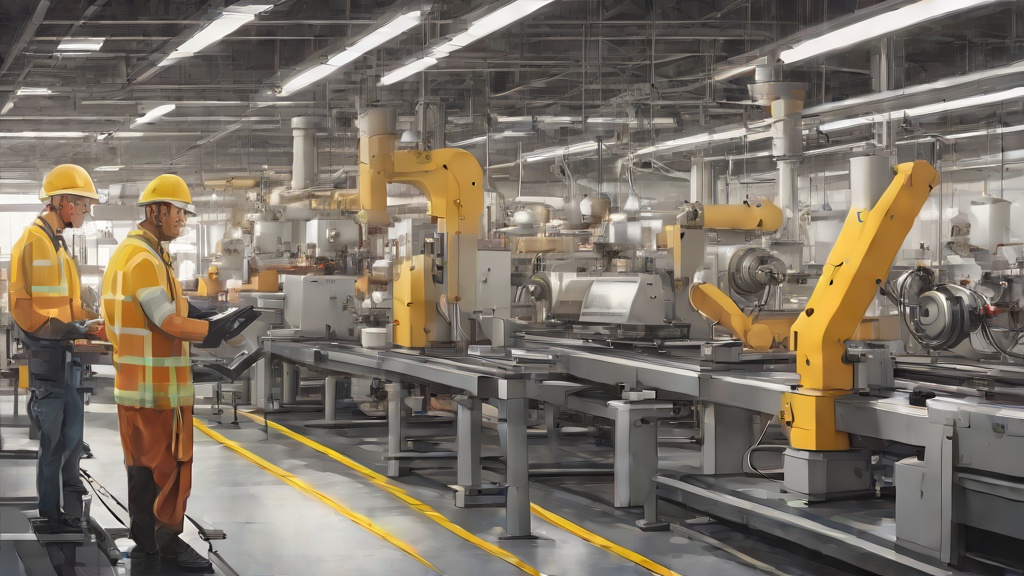
An Ohio factory considering AI may start with a problem that has nothing to do with algorithms: the production line cannot easily stop.
Case Western Reserve University researchers describe local manufacturers whose older equipment could benefit from sensors, but who cannot readily interrupt production to install them. Without useful data from the machines, a system that promises to anticipate breakdowns or reduce waste has little to work with. The researchers are exploring digital twins—virtual representations of equipment—and demonstration environments where manufacturers can see possibilities before committing their own lines.
That practical problem says a lot about Ohio’s AI opportunity. A factory can buy a tool, but someone still has to connect it to equipment, make sense of its output, keep it working and help the next shift use it. As more employers explore AI and automation, Ohio’s capacity to do that work may become a constraint.
The evidence does not yet show that adoption is outpacing the supply of qualified workers across the state. It does show why that is a question Ohio should take seriously now, while training programs and employer partnerships are taking shape.
What AI looks like on a factory floor
Imagine a manufacturer installing a camera system to spot defective parts. Before it can be trusted, the company needs to define the defects that matter, collect examples and test how the system performs on its own products. A camera that misses a damaged part can create a quality problem. One that rejects too many good parts can waste material and slow the line.
The job continues after installation. Lighting changes. A camera gets bumped. A new product has a different shape or finish. Someone has to notice when the system’s performance changes, investigate the cause and decide when a person should review its decisions. Operators need to know what an alert means and whom to call when something goes wrong.
That is a team effort. A supplier may install the equipment; an engineer may connect it to the line; a maintenance technician may troubleshoot the hardware. An experienced operator can explain what normal production looks like and recognize a problem that a dashboard misses. The same principle applies to other physical AI systems, from equipment-monitoring tools to robotics: useful software depends on sensors, machines, people and processes working together.
Office-based AI brings its own version of the problem. A tool that helps prepare documents or answer questions still needs reliable information, clear review responsibilities and coworkers who understand its limits. In either setting, training someone to open an AI application is a beginning. Making it part of a dependable workflow takes more.
The demand Ohio is preparing for
The Ohio Manufacturers’ Association points to a forecast that manufacturing adoption of AI and automation will more than double by 2030. Its notice does not explain the baseline or how adoption is counted, so that is a projection rather than a measured outcome. The association also identifies the skills it expects to become more important: interpreting data, overseeing systems, advanced maintenance and improving processes.
Those skills fit the work between a demonstration and a system that earns its place on the production floor. They also help explain why a workforce strategy cannot be limited to producing more software developers. Ohio needs people who know machinery and production, people who understand data and controls, and people who can teach those groups to work together.
That need arrives alongside a broader manufacturing workforce challenge. The association’s statewide Manufacturing Workforce Blueprint cites more than 35,000 manufacturing job openings projected annually. That figure covers manufacturing as a whole; it is not a measured shortage of AI workers, a count of unfilled AI jobs or a guarantee of net-new positions.
Ohio’s AI economy also extends beyond the businesses using AI. JobsOhio describes manufacturers supplying electrical systems, cooling equipment, fiber and precision components for the physical infrastructure behind digital services. A company making a cooling component is not necessarily deploying AI itself, but it can still participate in the investment and need skilled people to build and maintain its products.
From a course to a working system
Ohio already has pieces of a response. JobsOhio and the Enterprise Technology Association have expanded AI Ready Ohio, with online access statewide and in-person training in several regions. In September 2026, JobsOhio reported that more than 2,000 Ohioans had started or completed the program since its launch in November 2025. It separately reported that 1,500 had received certification during 2026.
Those numbers show reach. They do not tell us how many participants moved into relevant jobs or can install and maintain a particular factory system. Broad AI literacy is valuable, including for managers deciding what to buy and workers deciding how to use a tool. Employers also need a next step that connects that knowledge to real equipment and real responsibilities.
OhioTechNet offers one model for making that connection. Based at Lorain County Community College, it secured federal funding for an Industrial Training and Assessment Center intended to help smaller manufacturers adopt smart manufacturing while developing workers through upskilling, internships and apprenticeships. The announcement describes the program’s aims; it does not establish its results. Its basic idea is useful: let people learn while helping solve problems a manufacturer actually faces.
Universities can contribute in different ways. Case Western’s research addresses the difficulty of trying technology around existing equipment. Ohio State’s AI(X) Hub brings researchers across 15 colleges together, while the University of Cincinnati has convened industry, researchers and others around AI and robotics. Those connections create opportunities to move ideas toward use, though a research partnership or a successful event does not by itself tell us how many workplaces have gained implementation skills.
The manufacturers’ association has also described a training partner directory intended to help employers find schools and other providers aligned with their needs. Whether through a directory or a local partnership, that matching work matters. A small manufacturer should be able to explain a production problem and find practical help, rather than navigate a confusing collection of programs alone.
Build capacity where the work happens
Over the next several years, Ohio can connect these efforts more deliberately. Employers, community colleges, universities and workforce organizations can design projects around tasks workers will actually perform: adding a sensor, checking data quality, testing an inspection system, responding to a bad alert and maintaining equipment after a vendor leaves.
That should include people already on the job. A maintenance technician who knows an older line may need targeted training in sensors and data, not an entirely new career. An operator could learn how to assess alerts and teach coworkers. Apprentices and interns can bring new skills into a workplace while learning from experienced employees. Employers will need to give those people time to learn and a clear role in decisions about the systems they are expected to use.
Small and midsize firms may need shared demonstration facilities, trusted technical assistance and access to affordable expertise. A digital twin or test environment can help a company explore an idea without making its live production line the first experiment. Support should continue after installation, when equipment changes and workers discover what the original plan missed.
There is also a business case for involving workers early. People who operate and maintain a process can identify where an alert would be useful, where it would interrupt work and what a safe fallback should be. If a system changes someone’s responsibilities, training and a path to advancement make the transition more credible than simply adding another screen to the job.
What success would look like
By 2030, success would mean more than a long list of AI announcements. Manufacturers would be able to show that useful projects moved from trials into sustained operation, with dependable performance and people assigned to maintain them. Training providers would be able to show where participants went next, what jobs they entered and whether employers found them ready for the work.
For a smaller factory, success might mean finding help to retrofit one machine, reducing wasted material and knowing whom to call when a sensor fails. For a worker, it might mean learning a new skill on paid time, having a say in how a system is used and seeing that skill recognized in a better role. For Ohio, it would mean that the benefits reach beyond the largest employers and the easiest installations.
If implementation capacity lags, the opposite is possible. Companies could accumulate pilots that never become dependable operations. Workers could learn to ignore unreliable alerts, while maintenance teams inherit systems they were never given time to understand. Larger firms may be able to buy support that smaller ones cannot, widening the gap between them.
That outcome is not inevitable. Better products and capable suppliers can make deployment easier, and automation can reduce some labor needs even as it creates others. Ohio’s existing training and research efforts may grow alongside demand. What remains unmeasured is the statewide balance between adoption and the people available to make it work.
The opportunity is to build that capacity before the gap becomes the story. On the next shift, the test will be concrete: does the system help people do the job, can they explain its decisions, and is someone ready to fix it when it fails?
Sources
- Case Western Reserve University: AI and factory operations
- Ohio Manufacturers’ Association: AI and automation adoption forecast
- Ohio Manufacturers’ Association: Manufacturing Workforce Blueprint
- JobsOhio: Manufacturing the physical systems behind AI
- JobsOhio: AI Ready Ohio expansion and September 2026 program update
- Ohio Manufacturers’ Association: OhioTechNet workforce initiative
- Ohio State University: AI(X) Hub and University of Cincinnati: Ohio’s AI and robotics ecosystem
- Ohio Manufacturers’ Association: Workforce Training Partner Program