The Railroad at the Crossing: Norfolk Southern and the Communities Between
A stopped train can turn two crossings into a town’s immediate problem. The railroad behind it belongs to a much longer story: a stitched-together network that carries the goods of ordinary life, concentrates costs along its tracks, and has to answer for both.
The Railroad at the Crossing: Norfolk Southern and the Communities Between
Part III
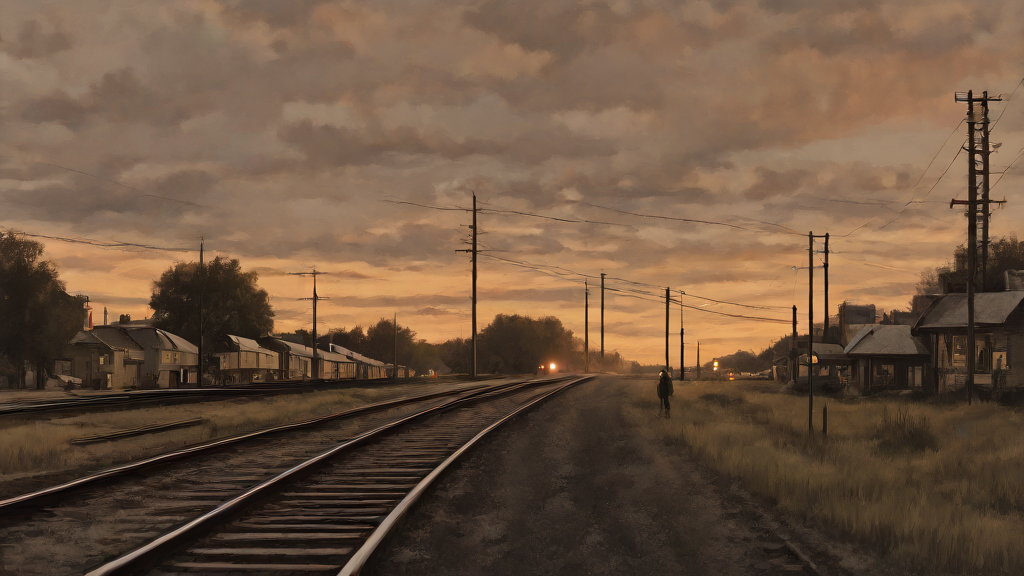
On Black Friday in Olmsted Falls, the problem was easy to see. A stationary train blocked two crossings near downtown. In a shop, Tori Brenneison had been hoping for more customers during her first Black Friday as a small-business owner. News 5 Cleveland reported that the train was waiting for what it described as a “mandatory crew change.” Brenneison told the station, “I was hoping for more than three customers through the doors.” [News 5 Cleveland]
That is the scale at which infrastructure first announces itself: not as a national freight network, but as the route a customer takes to a shop, or the crossing someone uses to get across town. A moving train asks for a pause. A train that stays asks people to make other plans.
The report establishes a disruption and one business owner’s disappointment. It does not tell us how many customers changed course, what the interruption cost downtown, whether an emergency call was affected, or why the replacement crew was delayed. “Mandatory crew change” is the station’s explanation, not an independently documented account of the train’s operating record. Those gaps matter. A blocked crossing can be a real burden without being evidence, by itself, of negligence.
A network made in layers
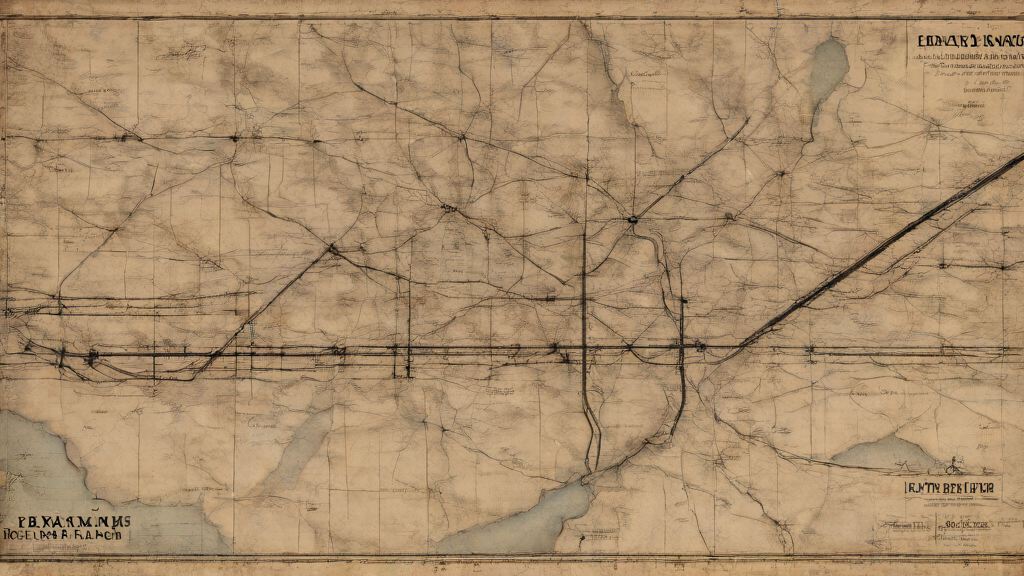
Norfolk Southern did not lay down one continuous railroad according to one master plan. The modern corporation took shape in 1982, when Norfolk & Western and Southern Railway combined. Both had gathered older regional lines through decades of expansion and consolidation. Later, Norfolk Southern and CSX jointly acquired Conrail and divided its assets; the new operating arrangement began in 1999. The corporate names mark important turns, but beneath them sit rights-of-way, terminals, junctions, and routes built at different times for different purposes. [Norfolk & Southern Railway Historical Society] [American-Rails]
That broad outline is useful, with a caution: the historical references available here are secondary leads, not a route-by-route history checked against original charters, merger records, maps, and timetables. They do not establish which predecessor companies built the particular segment at Olmsted Falls. A corporate family tree can explain how a network became large; it cannot, on its own, tell us how a specific town came to live beside one particular track.
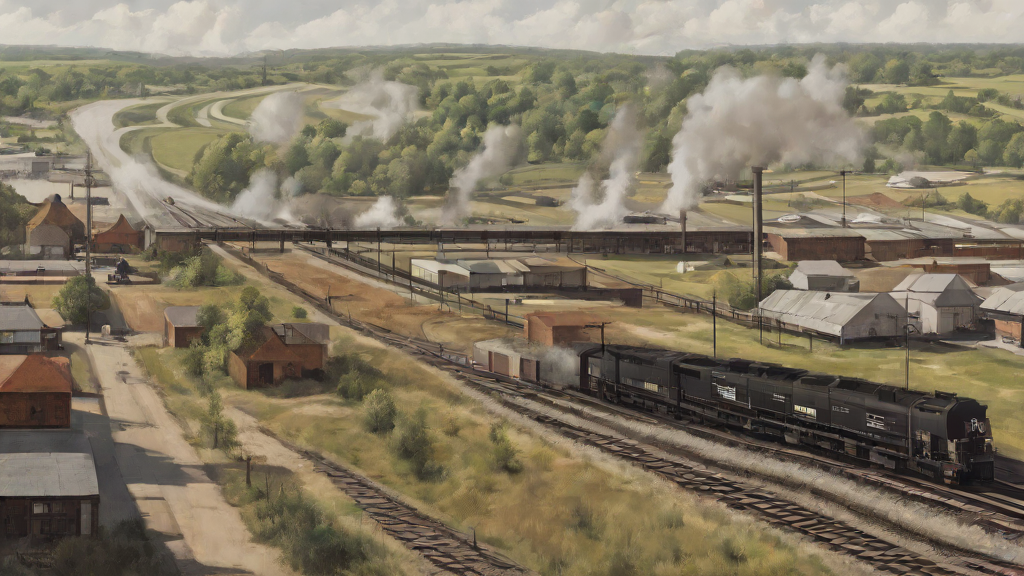
Still, the inheritance matters. Railways were built to connect places that had goods to move with places that could use or sell them. Their routes linked ports, inland towns, mines, farms, factories, and markets. As companies merged and traffic changed, new owners took over physical corridors whose geography was already set. The modern railroad operates the accumulated result: a system that crosses municipal boundaries every day, while its rails remain stubbornly in the places they were laid.
The freight behind ordinary life
Most people encounter freight rail indirectly. They see the train, perhaps, but not the long chain of materials and products behind it. Grain moves toward processors, ports, and other markets. Coal, aggregates, chemicals, metals, lumber, and petroleum serve industries and utilities. Containers connect ships, rail yards, trucks, and distribution centers; vehicles and parts move among plants, suppliers, and terminals. The Association of American Railroads describes these roles from the industry’s point of view. Its figures and comparisons need to be read as industry claims, and the materials reviewed here do not provide an independent, shipment-by-shipment comparison of rail with other modes. [Association of American Railroads]
The larger point does not depend on a fuel-efficiency ratio. Rail can consolidate large loads for long journeys; trucks provide the flexible connections to farms, factories, stores, and homes that the fixed rail network cannot. The two modes often work in sequence. A household may never see the freight train that carried ingredients to a food processor or materials to a building site, but ordinary life depends on supply chains that move things before they become groceries, walls, packaging, or products on a shelf.
That dependence is real without making every particular shipment indispensable, or every railroad decision socially beneficial. It means a prolonged interruption could ripple through shippers and transport links. It does not tell us how far, how quickly, or at what cost those effects would travel. National usefulness is not a blank cheque for local burdens. Nor does a local obstruction alone settle the wider value of the network.
Safety is a system, and accountability is specific
Rail operations depend on track and equipment, inspection and maintenance, dispatching, signals, crews, schedules, and rules for what happens when a warning appears. The labor in that system is not just a line item: trained crews and maintainers notice conditions, apply procedures, and make safety decisions. A crew change may be part of operating a railroad responsibly. That general truth cannot establish why this particular train stopped where it did, how long the relief took, or what other choices were available.
Nor does one event stand in for an entire safety record. In East Palestine, Ohio, a Norfolk Southern train derailed on February 3, 2023. The available summary of the National Transportation Safety Board’s investigation attributes the derailment to an overheated wheel bearing failure and describes the agency’s scrutiny of the wayside detector and crew response. It also summarizes the NTSB’s conclusion that the subsequent vent-and-burn of vinyl chloride tank cars was unnecessary and contributed to hazardous-material release. Those are grave, event-specific findings; they warrant attention to decisions, procedures, and oversight. They do not prove that every train or every employee presents the same risk. The NTSB’s final report is the primary record for those conclusions. [NTSB, RIR-24-05]
Accountability means following the evidence to the decision in question. In a serious accident, investigators may examine mechanical failure, detector placement, alarm thresholds, crew actions, and company procedures. In an hours-long crossing blockage, the necessary records are different: dispatch and crew timelines, the train’s operating circumstances, municipal and responder information, and the experiences of people trying to reach homes or businesses. A conclusion about one scale cannot substitute for the evidence at another.
Railroad management debates deserve the same care. “Precision scheduled railroading” is a broad label for management approaches, not a complete explanation of any incident. The Government Accountability Office reported that most of the largest U.S. freight railroads said they had adopted PSR, while available evidence was insufficient to determine its overall effect on safety and service. That finding is a reason to ask for specific operational evidence, not to treat a label as either a verdict or an acquittal. [U.S. GAO, GAO-23-105420]
Where the national line meets the local street
A railroad corridor can serve distant shippers and still divide a neighborhood’s ordinary routes. Its benefits are distributed across supply chains and regions. Noise, delay, exposure, and crossing conflicts are experienced close to the track. The company may be managing a crew or congestion elsewhere; the person waiting at a blocked crossing has no view of that wider operating picture, and may have no practical way around it.
There are possible responses, but each addresses a different part of the problem. Better notice can help residents and emergency responders plan; it cannot move a train. Dispatch and crew planning might reduce some avoidable delays, but any claim about this incident requires its operating records. Added sidings or other capacity could create more room for trains to wait clear of roads, though such projects require investment and land. Grade separations remove the crossing conflict at a particular location, but demand large, difficult funding and design decisions. A remedy should fit a documented cause rather than assume every blockage has the same one.
The law also sets boundaries between national railroad regulation and local authority. The materials available for this feature identify federal rail jurisdiction and Ohio emergency-planning rules as relevant references, but do not resolve how those provisions apply to the Olmsted Falls blockage. [49 U.S.C. § 10501(b)] [Ohio Administrative Code, Chapter 5507-1] Federal coordination may be important to a network that crosses state lines; local safety and access concerns still need a hearing grounded in the facts.
If the railroad stopped for longer
An extended Norfolk Southern interruption would not be a simple matter of sending every shipment by truck. Some loads might move on another railroad where routes, interchange arrangements, equipment, crews, terminal capacity, and operating rights line up. Some freight could shift partly to trucks. Other goods might be delayed or rerouted, or shippers might draw down inventories and adjust production. Each path depends on the commodity and corridor.
Truck capacity is not instantly waiting in reserve for a railroad’s freight. Nor is spare rail capacity freely transferable across a network: trains need compatible routes, terminal slots, locomotives, cars, and crews. Agricultural timing, specialized handling, warehouse space, and factory inventories would shape what could absorb a delay. A prolonged interruption could raise costs and disrupt production. The available evidence does not support a dollar estimate, a diversion percentage, or a prediction of a specific shortage. The scale would depend on how long the interruption lasted and what alternatives existed for each flow.
That uncertainty cuts both ways. It would be wrong to turn a possible disruption into an invented catastrophe. It would also be wrong to assume that a system carrying large, connected flows could stop without consequences. The honest answer is less dramatic and more useful: some traffic could adapt, some would be delayed, and estimating the balance would require detailed shipment, capacity, and inventory data not available here.
Back in Olmsted Falls, the question remains smaller and more exact. What happened on that stretch of track? Why did the train occupy two crossings for hours? What could the railroad, the city, or the state have done differently, if anything? The reporting leaves those questions open. It gives us one business owner ready for a busy day, two crossings blocked, and a town asked to work around an interruption it did not control.
A railroad earns its place in public life through the goods it moves and the care with which it operates. The communities along its tracks should not have to choose between recognizing that service and asking who bears the costs when the system stops. Both questions belong at the crossing.