A stopped train, three customers, and a Black Friday detour in Olmsted Falls
A train blocked two crossings near downtown Olmsted Falls for hours on Black Friday, complicating access to shops at the start of the holiday shopping weekend.
Tori Brenneison had been preparing for her first Black Friday as a small-business owner. She had hoped to see more than three customers come through the door, she told News 5 Cleveland.
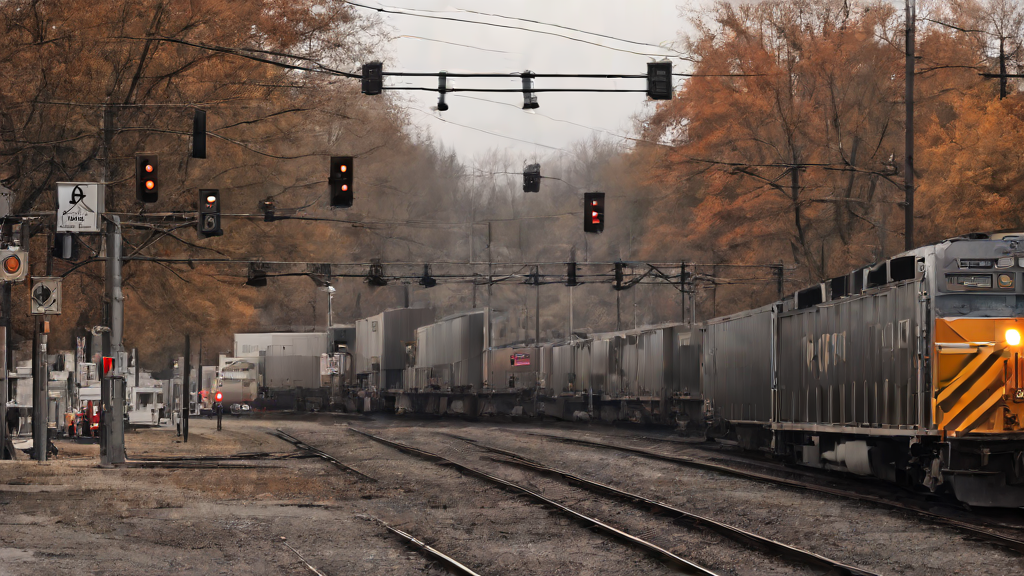
Outside, a stationary train was blocking two rail crossings near downtown Olmsted Falls. News 5 reported that the crossings were blocked throughout Friday, Nov. 27, 2026, while the train awaited what the station described as a mandatory crew change.
For a shop trying to make the most of a holiday weekend, that is an awkward thing to have between the front door and a customer. A passing train asks people to wait. A train that stays put leaves them to decide whether to find another route, come back later, or go somewhere else.
Brenneison’s disappointment gives the disruption a human scale. Her account does not tell us how many potential customers turned around, or how much business the train cost her. It does show why the timing mattered: this was a day she had prepared for, and the turnout she described fell short of what she had hoped for.
The problem extended beyond a single storefront. With two crossings blocked near downtown, anyone whose usual approach depended on either crossing had to wait or find another way around. The shops could be open and still be harder to reach. During the holiday shopping weekend, a message from downtown businesses was simple: they wanted people to visit, even if getting there meant going around the train.
The available reporting establishes a stoppage lasting hours, but it does not provide a precise start time, clearance time, or total duration in the excerpts reviewed. The station’s headline identifies a mandatory crew change as the reason the train was waiting. The available excerpts do not establish why the replacement crew was delayed, which railroad operated the train, or the names of the two blocked crossings. Those details matter, and they remain unanswered here.
There is also no reliable count in the available excerpts of affected motorists, lost sales, or delayed emergency calls. The inconvenience to downtown access is clear; a dollar figure or a broader assessment of the damage would require more reporting.
What remains is a small, tangible picture of a larger interruption: a business owner ready for holiday shoppers, two crossings occupied by a train, and customers asked to work out another way in. The train’s stop was temporary. For a shop counting on a particular Friday, the hours still mattered.