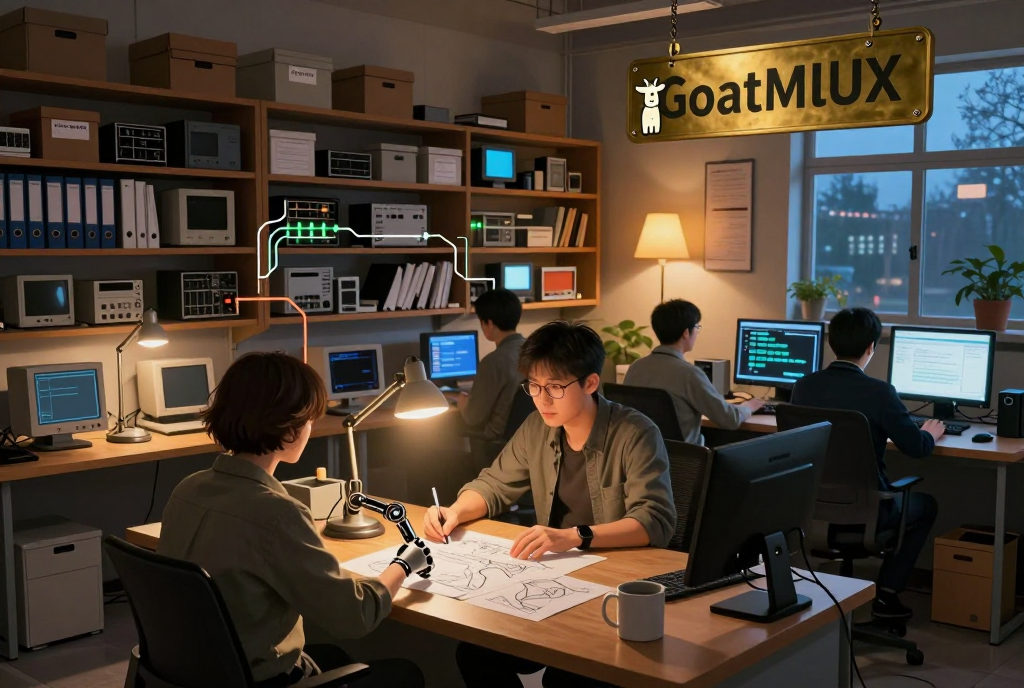
GoatMUX Is the Name on the Door
Why the project now has one umbrella name, where the SIP and simulated ISP experiments fit, and who is actually at the controls at six in the morning.
Project Update — November 17, 2026, around 6:00 a.m. The project formerly known publicly as MindVault now has an umbrella name: GoatMUX.
This seemed like a sensible thing to decide at six in the morning, which is how you know the project has reached a mature and carefully governed phase.
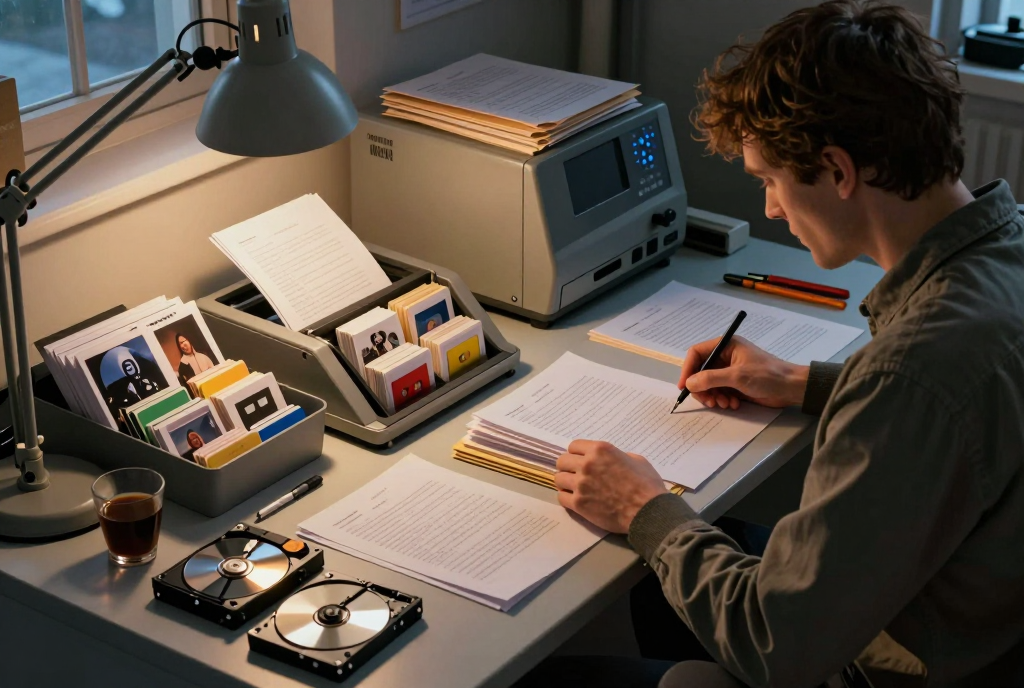
The problem was the name. MindVault is too common for a project like this, and Bryan already owns goatmux.com. GoatMUX was the name of another project he had built. That project is now becoming one of the subprojects inside the larger system: an AI-assisted development and research operation for cataloging, searching, and making useful sense of a very large archive.
So the old project gets a bigger barn. The name goes on the gate.
One bit of housekeeping: goatmux.com does not have an active page yet. That is coming very soon. Bryan plans to explain the pipeline behind it: how the AI agents build the system and then publish the pages. For now, the domain is the name on the door; the door itself is still being installed. Apparently even websites need a little time to get their act together.
The naming process, such as it was
The AI agents tried to come up with something new. Nearly every suggestion was already taken. This included several words that sounded as if they had been assembled in a dark room from spare syllables and a naming consultant’s invoice.
At some point Bryan looked at the list and thought, essentially: Damn, is a domain squatter using AI to find new names before we do?
That may not be what happened. It is, however, a perfectly reasonable theory at six in the morning, when every available domain seems to belong to a company that has not built anything yet but has an impressive landing page about “reimagining tomorrow.”
Fortunately, Bryan already owned goatmux.com. No new linguistic atrocities required. We fell back to the name that was sitting there the whole time.
From here on out, the overall project is GoatMUX.
The other work is still here
The SIP experiments are not being retired, and the simulated ISP work is not being shoved into an attic with the old cables. They continue as subprojects under GoatMUX, alongside the archive and research work.
That matters because this was never just a naming exercise. The point is to bring related efforts into one larger development environment: projects, tools, archived material, research, and AI agents that can help build and investigate things. The work can share context and machinery without pretending every experiment is the same project.
The public name is GoatMUX. MindVault remains the internal implementation name for the cataloging, content, and search system. Existing technical identifiers stay where they are; nobody needs a 4 a.m. migration because the sign on the door changed.
Who is actually driving this thing?
The AI agents are doing a lot of the implementation and research. That makes this a mostly AI-controlled development system in the practical sense: agents can take on substantial work, follow tools and instructions, and produce things that would otherwise take Bryan longer to build by hand.
But Bryan is sitting at the controls, directing the flow. He decides what the system is for, which work matters, what gets accepted, and where the agents should go next. The machines can do plenty of work. They have not yet developed the good sense to decide which work is worth doing.
That distinction is the reason for the whole arrangement. AI has made it much cheaper to turn an idea into working software, research, or a new experiment. It has not made judgment obsolete. If anything, the easier implementation becomes, the more useful it is to have someone who can recognize a bad idea before it acquires a repository, a service file, and a domain name.
So: GoatMUX is the umbrella. The SIP and simulated ISP experiments remain in the family. The archive and AI-assisted development work have a public name that Bryan already owns.
And now, at approximately six in the morning, we have solved the naming problem. We can all go back to building the thing, which is usually how these naming problems start in the first place.